

Most assessments tell you who passed. Not whether the test told you anything true
Can you demonstrate that candidates who scored well actually became strong performers? Can you show that your assessment process predicts success, not just filters volume? If someone challenged your hiring decisions, could you defend them with evidence?
These are the questions that matter. Codility exists to help you answer them.


Evidence over signals
Hire for proof, not proxies
For decades, technical hiring has relied on proxies: where someone went to university, which companies they have worked for, how they perform in abstract whiteboard exercises. These signals correlate weakly with job performance. Often, they correlate more strongly with privilege than with capability.
Skills-based hiring asks a simpler question: can this person do the work? And it answers that question with evidence, not assumptions.
Codility assessments are designed to measure the skills that predict success in your specific engineering environment. Not general aptitude. Not algorithmic trivia. The actual competencies that determine whether someone will ship quality code, make sound architectural decisions, and strengthen the team around them.
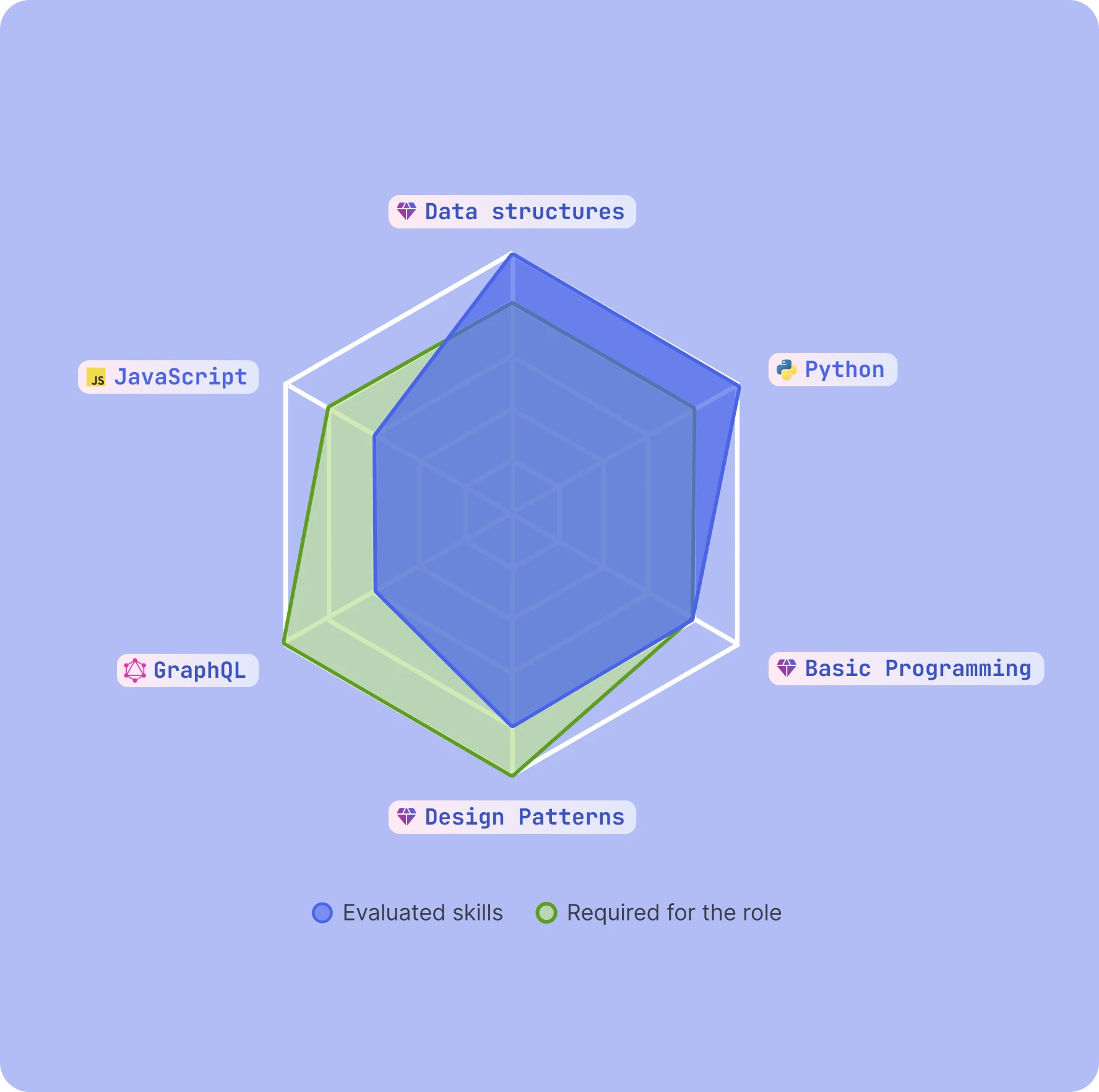
Trusted by global organizations
Trusted by GitHub, SpaceX, Tesla, EY, LSEG, SAP, Barclays, Citi.




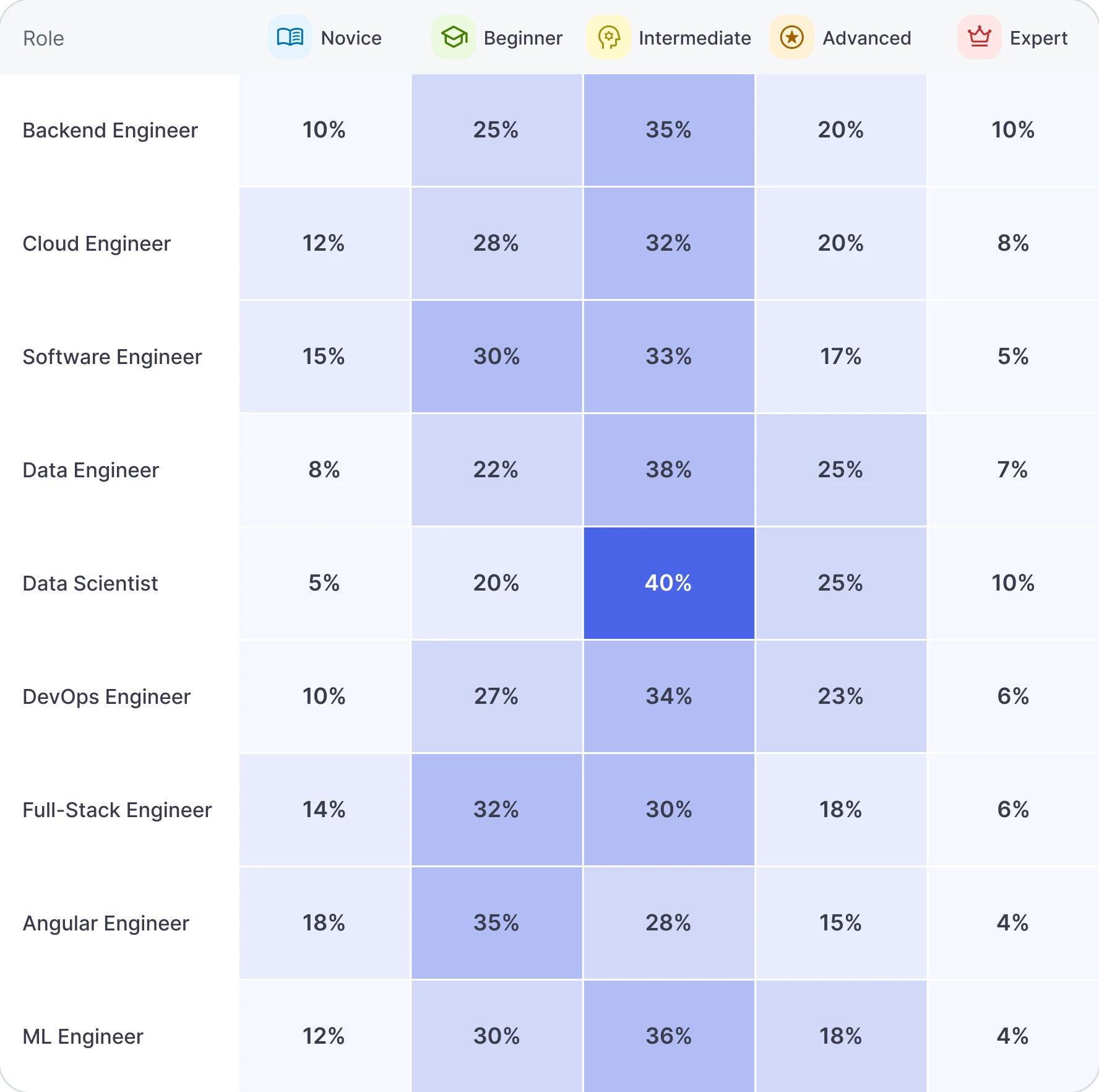
Closing the loop
Hiring is where the relationship starts. Demonstrating it worked is where the value compounds
Most assessment providers disappear after the hiring decision. The test is scored, the candidate is hired or rejected, and the platform moves on. Whether the hire actually succeeds is someone else’s problem.
Codility is building the capability to close that loop. Working with customers to track assessment scores against actual job performance over time. Did candidates who scored well become strong performers? Did the signals in the assessment translate to success on the job?
This matters because it transforms the conversation. You are not being asked to trust an assessment on faith. You are building evidence that your hiring process actually works, and refining it based on what the data shows.
Science that scales
Assessment science you can actually use
Every assessment provider claims scientific rigour. IO psychology credentials, validation studies, published research. These are important, but they are table stakes for a serious platform. They do not differentiate on their own.
What differentiates is whether that science is practically available to you. Translating scores into hiring decisions. Understanding what results actually mean for your roles. Building assessment programmes that improve over time, not just tests that filter volume.
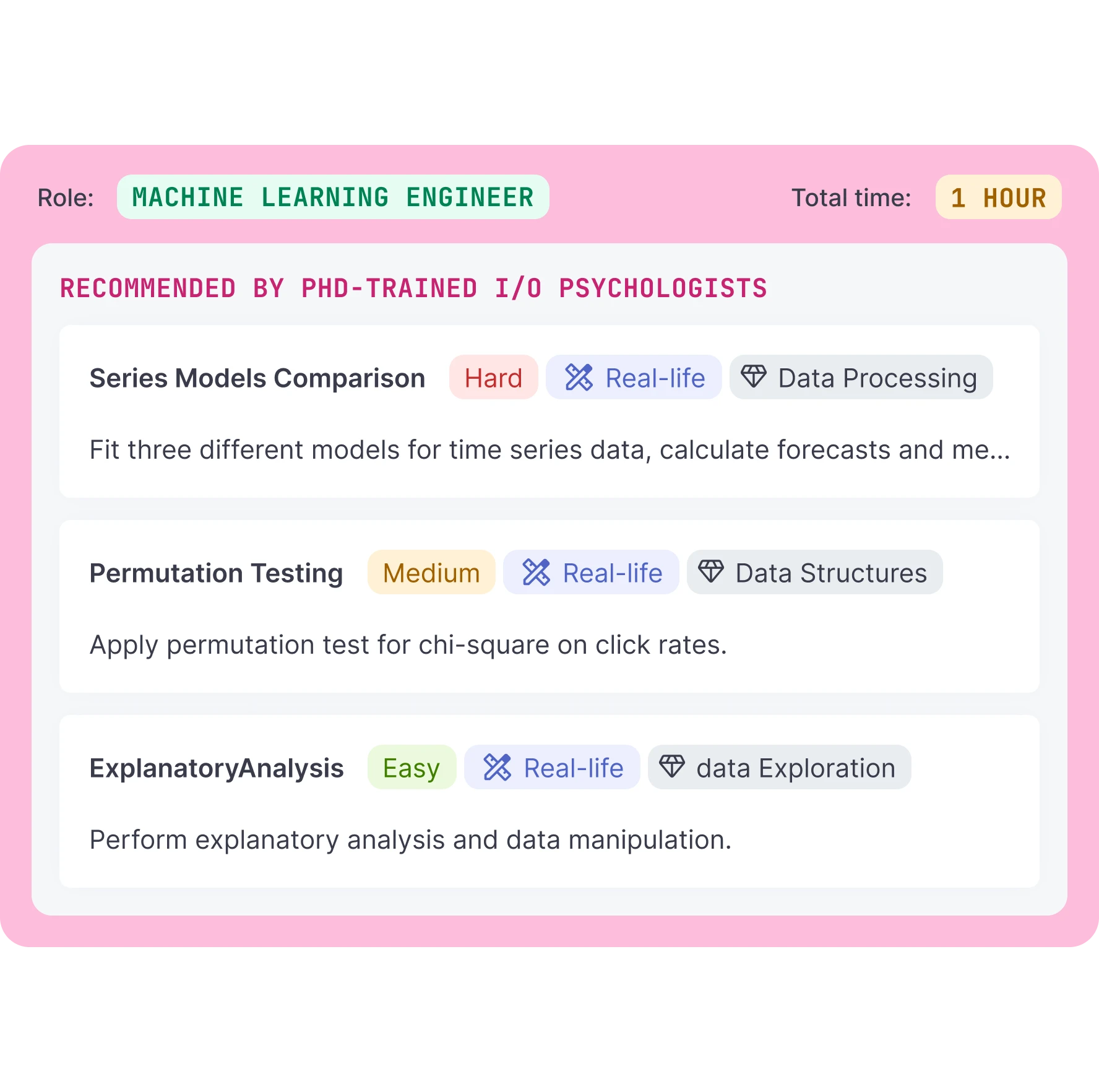
IO psychologists and assessment specialists work directly with you. Not as a premium add-on. Not gated behind an enterprise tier. As part of how this works. When you are designing an assessment strategy for a critical engineering role, or interpreting results that will inform a significant hiring decision, you are not navigating that alone.
Your assessment investment should not vanish when hiring slows
Choose how AI fits in
Hiring is cyclical. Budgets tighten. Headcount freezes happen. If the only value an assessment platform provides is screening candidates, its relevance disappears the moment hiring pauses.
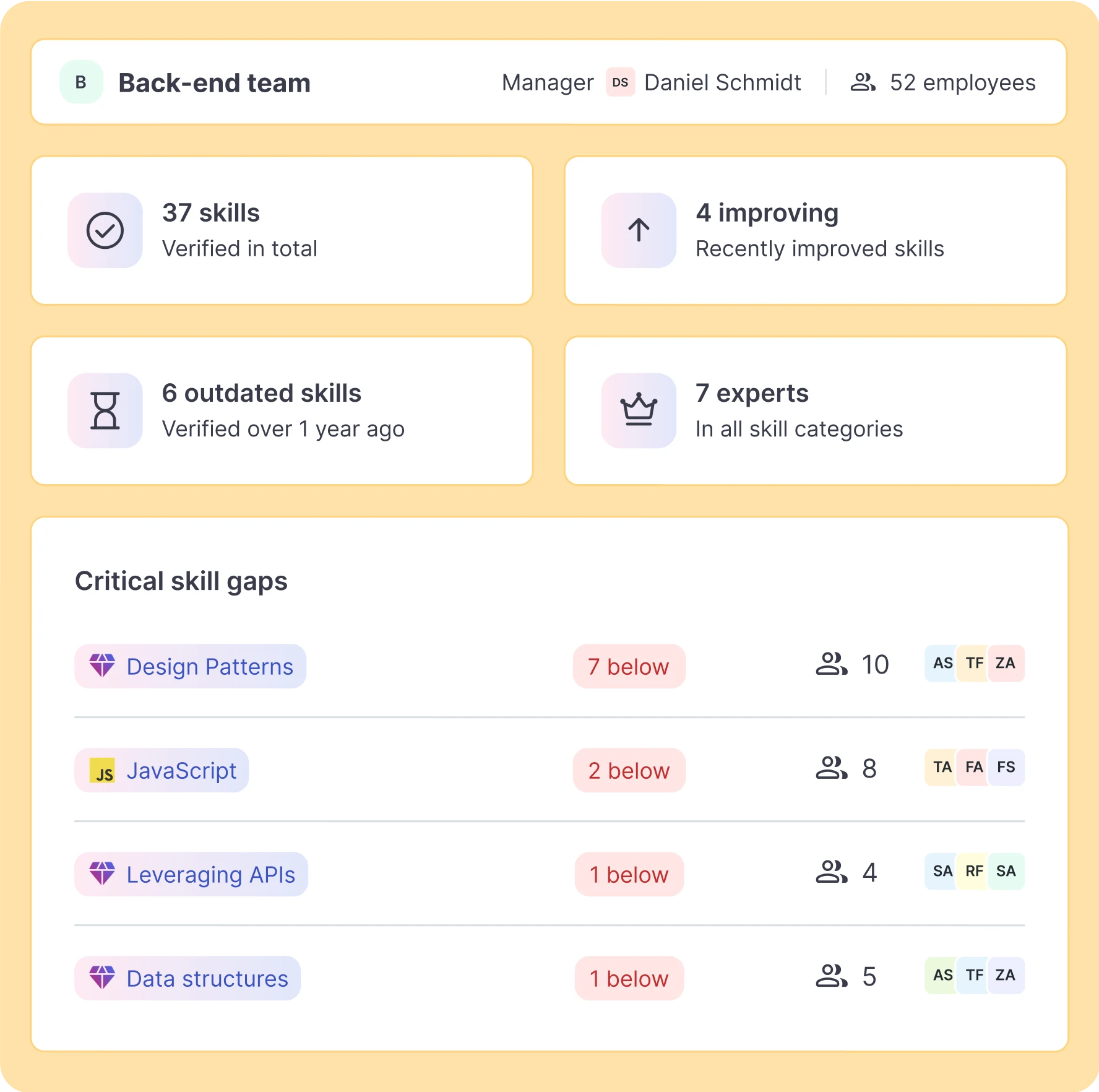
Skills Intelligence applies the same validated methodology to your existing engineering workforce. Map current capabilities across your team. Identify development opportunities before they become performance gaps. Make informed decisions about project staffing, succession planning, and skills investment, whether you are actively hiring or not.
The result: a platform that provides continuous insight into your technical capability, not a tool that sits idle between hiring cycles.
Defensible decisions. Compliant infrastructure
University, past employers, whiteboard performance. These are proxies that correlate weakly with job success. You need answers to better questions. Can they build? Will they communicate in PRs and code reviews? Do they fit how your team operates?
Skills-based hiring gives you evidence, not intuition.

Compliance and security
- ISO 27001 certified
- GDPR, SOC 2, CCPA compliant
- WCAG 2.2 AA accessible
- EEOC and state-level legislation alignment (US)
- EU AI Act readiness (Europe)
- US or EU-based data hosting, your choice



Integrations
Connects with 21 major platforms. Assessment data flows into your existing systems, not a silo that requires manual export.


Trusted by engineering teams where the stakes are highest

With Codility, our teams ran 750 candidate tests over 90 days, saving 2,200 hours of interview time. That kind of productivity is like gaining time to launch an entirely new product or enter a new vertical.


Codility helps us remove bias by ensuring a consistent, equal, and fair process for every candidate at LiveRamp.







Frequently Asked Questions
What makes Codility different from other technical assessment platforms?
Codility is built specifically for engineering assessment by industrial-organisational psychologists. Assessments are designed to predict real-world job performance, not just test whether someone can solve a coding puzzle. IO psychologists and assessment specialists work directly with customers to design, validate, and refine assessment programmes. Published validation studies and a technical manual provide the evidence base that enterprise organisations require.